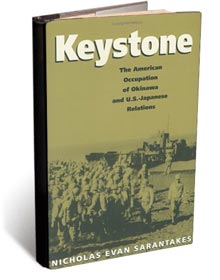
Following the battle of Okinawa in 1945, the United States ruled this island its surrounding atolls as a colony in everything but name until 1972. The island had been the strategic keystone of the American postwar base system of double containment in the Pacific and the only spot in that chain that American officials insisted on governing under the legal cover of “residual sovereignty.”
Why had the United States insisted on administering an entire province of a country that it otherwise called an ally? And why did the Americans return Okinawa when they did? In this thoroughly researched, carefully argued work, Sarantakes argues that policy makers in Washington worried that the Japanese might return to their aggressive and expansionistic prewar foreign policies after the occupation of Japan ended. Even after it was abundantly clear that Japan posed no threat to its neighbors, the United States insisted on retaining the island, fearing that Japan might adopt a policy of neutrality during the Cold War.
Sarantakes uses recently declassified documents to examine America’s larger strategic purposes during this period. The story he tells includes soldiers fighting in combat, mobs rioting, diplomats navigating the dangerous waters of power, and clever politicians on both sides of the indigo-colored Pacific taking high-risk gambles. In telling this tale, he brings our attention to an episode in American foreign relations that has been taken for granted for half a century.